
The Executive Who Renounced His Household Registration — What the 'War' Between China's Wealthy and the Tax Bureau Means for Japan's Property Market
What You Will Learn
Q. Why do wealthy Chinese buy Japanese real estate?
Q. What happens when you renounce your household registration in China?
Q. How does China's tax crackdown affect the Japanese market?
The Man Who Renounced His Registration
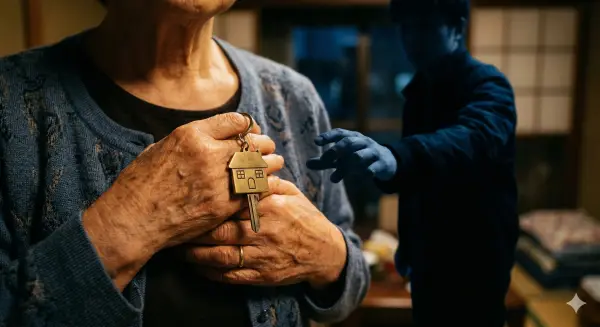
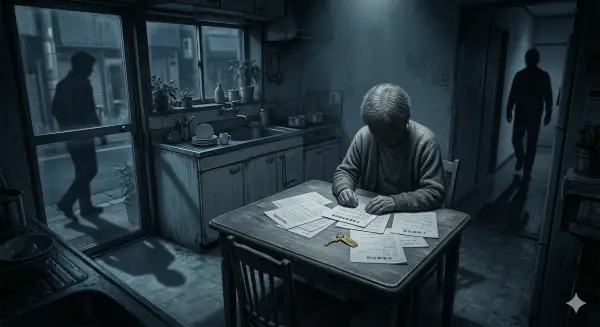
A business executive was summoned to the tax bureau.
The bill: several hundred million yuan. In Japanese yen, that’s tens of billions.
Furious, the executive renounced his household registration on the spot.
China’s household registration (hukou/户口) works differently from Japan’s family registry system. It’s tied to your place of residence and access to social services — renouncing it doesn’t automatically strip your nationality. In fact, he could still use his passport normally. Even renew it.
By Japanese standards, this makes no sense. But in China, household registration and citizenship don’t necessarily move in lockstep. For the wealthy with overseas living arrangements, losing their hukou barely matters. What matters is stepping outside the tax authority’s jurisdiction.
A scorched-earth counterattack.
”If You Pay, They’ll Just Come Back for More”
The executive’s relatives heard this story. They, too, were wealthy — successful business owners carrying their own tax exposure.
They wondered:
“Maybe we should proactively pay a few hundred million before they come for us…”
Get ahead of it. Pay voluntarily. Maintain a cordial relationship with the authorities. In Japanese terms, this is the “proper” approach — file your returns diligently, keep everything clean in case of an audit.
The executive shot that idea down instantly.
“You idiot. The moment you pay, they’ll think you’ve got plenty more. They’ll just keep coming back for more!”
The tax bureau starts to look like a shakedown operation. A “war without honor or humanity,” to borrow the title of a famous Japanese gangster film.
Japan’s tax authority can be tough, too. But it operates within the law. If you disagree with an assessment, you can file an objection or take it to court. You can fight within the rules.
In China, the rules are different. Tax assessment criteria are opaque. Authorities exercise broad discretion. If they decide you have the capacity to pay, they’ll come back for more. Money given once begets demands for more money. That’s why the wealthy deploy every conceivable tactic to appear unable to pay.
The eternal contest between state and individual. A Chinese proverb captures it perfectly:
“Where there is policy above, there is countermeasure below.” (上有政策,下有对策)
The Asset Defense Playbook
The tactics Chinese wealthy use to protect their assets are varied and sophisticated.
Overseas real estate acquisition. Japan, Singapore, Canada, Australia. Property in countries with strong private property protections and political stability serves as a “vault” for Chinese wealth.
Family relocation abroad. Send a spouse or children overseas first, hold assets in their names. Create “distribution nodes” for wealth in jurisdictions beyond Chinese authorities’ direct reach.
Business globalization. Establish affiliated companies overseas and move capital through legitimate business transactions. Not illegal per se, but constantly in a grey zone contested by regulators.
And then there’s renouncing your household registration. Extreme, but apparently not as rare as you’d think.
The common thread: maintaining a state where the government cannot fully map your assets. Living in Japan, this is hard to imagine. But in countries where private property rights aren’t adequately protected, asset defense is a survival strategy.
Why Japan?
Among all the available “vaults,” why do so many choose Japanese real estate?
Our firm specializes in ultra-luxury properties in Tokyo with particular strength in inbound transactions. Working with wealthy clients from China and elsewhere, their reasons for choosing Japan are clear.
First, legal stability.
In Japan, foreigners can own property on exactly the same terms as Japanese citizens. Property rights are robustly protected by law. Arbitrary government seizure is unthinkable. This “obvious” fact holds enormous value for Chinese wealth.
Second, the weak yen.
Priced in yuan or dollars, Tokyo real estate looks remarkably cheap compared to peer cities worldwide. London, New York, Hong Kong — equivalent properties can cost double or more. Tokyo offers world-class urban living at a relative discount.
Third, tax structure advantages.
When non-residents hold Japanese property vacant — no rental income — the only obligation is fixed asset tax. Generating rental income triggers complex filing requirements and audit risk. “Just holding” keeps things simple.
The foreign owner who leaves a property vacant isn’t being lazy. It’s a calculated, rational decision.
How This “War” Affects the Japanese Market
The battle between Chinese authorities and the wealthy is sending real shockwaves through Japan’s property market.
Buying pressure. When the wealthy decide “it’s not safe to keep assets at home,” offshore transfers accelerate. Japanese real estate is a prime destination. Paradoxically, the harder authorities crack down, the more capital seeks refuge abroad — that dynamic was in full force until very recently.
Selling pressure. But as I detailed in last week’s article, remittance controls have simultaneously tightened. People want to move money out but can’t. So they sell existing Japanese holdings to raise cash.
Both buying and selling pressures coexist. This contradiction is making the market exceptionally hard to read.
And within the “wealthy,” there are layers. Those affected by remittance controls and the ultra-wealthy who’ve already positioned themselves beyond regulatory reach. The former are forced to retreat. The latter see opportunity in a market with fewer competitors.
The property market is not monolithic. Even “Chinese money” is not one thing — it’s a complex, stratified ecosystem.
What Japanese People Can Learn
The executive who renounced his Chinese household registration wasn’t simply playing defense. He was almost certainly already making his next move.
Hong Kong, Singapore, Australia — jurisdictions with no inheritance tax or extremely low rates. If your wealth is large enough, obtaining permanent residency or citizenship through investment programs is straightforward. Plenty of countries will grant you a passport in exchange for capital. Renouncing a Chinese hukou isn’t “fleeing” — it’s switching to a more favorable system.
This isn’t limited to Chinese wealth. I’ve heard of former Japanese nationals who acquired Hong Kong citizenship to protect their assets. They spend more than 180 days a year outside Japan, shifting their tax residency. Japanese people are doing this too.
For the majority of Japanese, however, “you pay your taxes” and “you follow the authorities” remain deeply ingrained attitudes. That’s a virtue. A stable rule-of-law society depends on citizens’ commitment to tax compliance.
But when it comes to protecting their own assets, Japanese people could afford to be a bit more alert.
Deferring inheritance planning until properties become liabilities. Ignoring tax code changes and losing money without realizing it. Buying real estate without properly reading the contract.
I’m not suggesting anyone switch nationalities. But the awareness that “my assets are mine to protect” transcends nationality.
Closing Thoughts — The Battle Continues
The war between China’s wealthy and the tax authorities has no end.
When authorities impose new regulations, the wealthy devise new countermeasures. When those are blocked, they find alternative routes. This back-and-forth could be called a Chinese tradition stretching back millennia.
And the waves reach Tokyo’s property market.
From a broker’s perspective, the important thing is not to view this emotionally — “foreigners are buying up everything” — but to coolly understand why they choose Japan and what structural forces are at work.
Understand the structure, and you can see what comes next.
State versus individual. Policy versus countermeasure. An endless game. And in the middle of it all, Tokyo’s real estate market continues to sway.
Real estate is an information business. Move on facts, not feelings.
That’s the only rule for surviving in this world.
This article is based on knowledge gained through real estate brokerage practice. It is not intended to promote prejudice against any country or ethnicity. For real estate inquiries, please reach out through our contact form.
This article is provided for general informational purposes only and does not constitute advice on any specific transaction or investment decision. For advice on your particular situation, please consult a qualified professional.